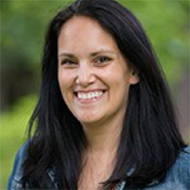
Mixalhitsa7 Roxane LetterloughAssistant Professor | Faculty of Education &
Social Work
Email: rletterlough@tru.ca
Interests
Mixalhts'a7 s7ucwalmcwts skwatsits.
My Statimcets name is Bear Skin Blanket
A STATIMC STORY: THE TWO COYOTES
adapted by Roxane and Micah Letterlough
There were two coyotes.
One said, I am a Coyote. You are not a Coyote. You are Another One.
The other replied, No way, I am also a Coyote!
But the first insisted, No, you are Another One. Let's settle this right now. I'll cross the playground,
and you listen to what the grade 3 class says.
The first Coyote trotted across the playground. As he passed by, the grade 3 class spotted him and
exclaimed, Hey, look! It's a Coyote! A real Coyote!??? He continued on his way and disappeared from
view.
Then the second Coyote took his turn. He appeared on the playground, catching the attention of the same
grade 3 class. They pointed and said, there goes Another One! It's Another One! He carried on and
reached the spot where his friend was waiting.
See! said the first Coyote. Did you hear them? I am a Coyote, but you, you are Another One.
Walking in Two Worlds:
In many Indigenous communities, Coyote is a revered teacher. Often called a trickster, Coyote's stories
carry profound lessons about how to live, how to interact with others and the land, and, most
importantly, how to understand oneself. One story, The Two Coyotes, resonates deeply with me as it
reflects the tension many Indigenous academics feel in navigating Western institutions.
In the story, one Coyote is seen as truly belonging, while the other is labeled "Another One," even
though both know they are Coyotes. This narrative speaks to the experience of walking in two worlds a
journey familiar to many Indigenous scholars. We often inhabit spaces where our identities and
methodologies are misunderstood or questioned, leaving us to balance the rich teachings of our
communities with the demands of Western academic systems.
Like Coyote, I have faced moments of affirmation and moments of doubt. Some days, I feel deeply
connected to my role as an Indigenous educator and researcher, rooted in my community's teachings. Other
days, I feel like "Another One," as though I am navigating a space where I don't fully belong. Yet, just
as Coyote learns through both triumphs and missteps, this duality has shaped my approach to research,
teaching, and mentorship.
Coyote's lessons remind me that the challenges of walking in two worlds are not just barriers but
opportunities to bridge understanding. My work seeks to weave Indigenous knowledge systems and
methodologies into academia, creating space for future generations to belong fully as themselves. It is
this commitment to learning, teaching, and storytelling that defines my research and my journey as an
Indigenous scholar.
Research Interests
My research focuses on Indigenous knowledges and pedagogies, with a particular emphasis on storywork,
intergenerational methodologies, and matriarchal teachings. As a scholar and community-engaged
researcher, I center the lived experiences, oral traditions, and land-based practices of the Statimc
Nation, contributing to the revitalization and continuation of Indigenous ways of knowing.
Through my work in language revitalization, I explore the deep connections between language, identity,
and place, drawing on community-led approaches to strengthen intergenerational learning. My research is
grounded in relational accountability, prioritizing collaborative and reciprocal engagement with
Indigenous communities. I am particularly interested in the ways that storywork - through oral
narratives, creative expression, and land-based education transmits knowledge, sustains cultural memory,
and fosters resilience.
I also work with Indigenous methodologies that center matriarchal governance, highlighting the
leadership and knowledge systems carried by women. My approach blends academic scholarship with
community knowledge, ensuring that research serves the needs and priorities of Indigenous peoples.
Education
Doctor of Philosophy, Faculty of Maori and Indigenous Studies (ABD)
University of Waikato (New Zealand)
Matriarchal Legacy: Intergenerational Research Empowering Statimc Women through Nxekmenlhklha muta7
Ntkamenlhklha (Statimc Laws and Way of Life)
Supervisor: Dr. Linda Tuhiwai Smith
Masters of Education, Indigenous Knowledges and Indigenous Pedagogies
University of British Columbia
Achieving Academic Excellence Through Cultural Programming
Supervisor: Dr. Jo-Ann Archibald & Dr. Jan Hare
Bachelor of Education, Minor- Mathematics
Simon Fraser University
Professional Development Program, Secondary Social Studies
Simon Fraser University
Post Baccalaureate Diploma; First Nations Studies
Simon Fraser University
Bachelor of Arts, Major - Anthropology, Minor - First Nations Studies
Simon Fraser University
Publications
Book Chapter Contributor: Statimc Matriarchal Leadership Ethics
TRU Pressbook for EDUC 5990 Ethical Issues in Higher Education Leadership.
Letterlough, R., Bull, R., & Terry, T. (2021). Intergenerational healing through Intergenerational
research. Knowledge Makers Journal, 6, 107.
Awards:
National Teaching Award (Canada) - Alan Blizzard Award 2019 Society of Teaching and Learning in Higher
Education awards recognizes and celebrates excellence in collaborative teaching and learning in
post-secondary education.
Faculty Excellence Award, Thompson Rivers University 2022
Award for Excellence in Interculturalization, Thompson Rivers University 2024
Indigenous Business Excellence award, Kamloops Chamber of Commerce 2024
Employment History
Associate Teaching Professor, Thompson Rivers University
Kamloops/Thompson District Primary/Intermediate Aboriginal Resource Teacher
University of British Columbia NITEP (Native Indigenous Teacher Education Program)
Intermediate Teacher, Sk'elep School of Excellence
Intermediate Teacher, Chief Atahm Secwepemc Immersion School
Courses Taught
EDEF 3100 History of Education
EDEF 3200 Theoretical Frameworks
EDFN 4200 Aboriginal Culture and Learning
EDSC 4150 Environmental Education
EDUC 5990 Learning From the Land II
FNST 2200 First Nations Oral Traditions
EDTL 3100 Teaching and Learning 1
EDTL 3200 Teaching and Learning 2
EDCO 3100 Communications 1
EDCO 3200 Communications 2
EDSO 3200 Social Studies Methods
Thompson Rivers University Open Learning
EDFN 4201 Aboriginal Culture and Learning
HUMS 1771 Introduction to Human Service Practice with Indigenous Communities
Professional Affiliations
Education Indigenous Cultural Advisor, Bachelor of Elementary program (TRU)
Co-chair Decolonization Indigenization Reconciliation Standing Committee (TRUFA)
Co-chair Decolonization Indigenization Reconciliation Standing Committee (Federation of Post-Secondary
Educators)