
Nursing Menu
Scholar Profiles
Learn how our researchers develop innovative solutions to improve health outcomes, practice and policy at the population level.
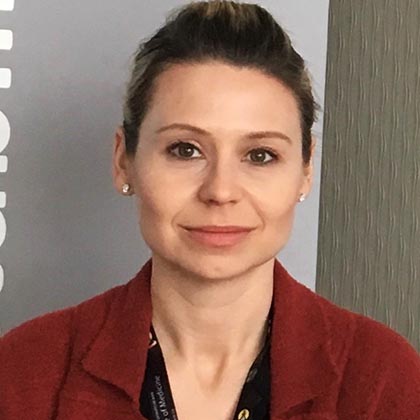
Juanita-Dawne Bacsu
Dr. Juanita-Dawne Bacsu is an Assistant Professor and Tier II Canada Research Chair (CRC) in Nursing and Population Health. Her CRC research focuses on improving the health equity and quality of life of rural older adults living with dementia and their family care partners.
More
The goal of her research is to reduce stigma of dementia and improve equitable access to health and support services to enhance rural aging. Her research expertise include dementia, rural health, gerontology, stigma, ageism, social media, health policy, and age-friendly environments.
Dr. Bacsu has published 23 peer-reviewed journal articles, five book chapters, presented at 57 national and international conferences, and delivered 25 community workshops. Through her work at the Saskatchewan Population Health and Evaluation Research Unit (SPHERU), she has helped write and prepare 26 national and provincial level grants with 18 being successful and worth $4,809,835.
Dr. Bacsu has been a Research Associate with SPHERU since 2009, and a board member with the Canadian Rural Health Research Society since 2011. Prior to this, she was a senior communications manager for the provincial government, a television segment host, and co-owned a family medicine clinic. Recently, she co-produced a podcast series with the Gerontological Society of America where she hosted episodes on stigma of dementia and rural aging.
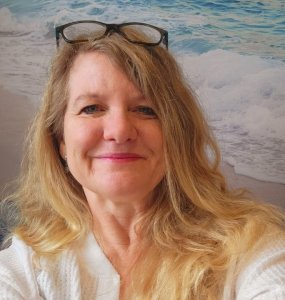
Florriann Fehr
Dr. Florriann Fehr, RN, MN is an Associate Professor and interim MN Coordinator for the School of Nursing awarded a full-time teaching position in 2002. She is a TRU alumnus, graduating as a diploma nurse from Cariboo College in 1992.
More
Dr. Fehr’s research, consulting, and teaching interests developed from over 30 years of nursing practice, starting as a Street Nurse in Calgary before moving north as a Community Health Nurse in the Northwest Territories with several communities (Norman Wells, Behchokǫ̀, K'asho Got'ine, Délįne, Sachs Harbour, and Tuktoyaktuk). She maintained a casual nurse position from 1993-2014 at Royal Inland Hospital, giving her a vast range of nursing experience (maternity health, child health, women’s health, family health, and medical/surgical nursing).
Dr. Fehr’s long-standing professional efforts have been committed to retaining new nurses and graduating successful students with strong relational practice skills, as the practice of quality nursing directly relates to promoting patient safety. In the last five years, she has risen to be a leading national anti-bullying consultant and educator, using cognitive rehearsal training strategies with students and new graduate nurses in healthcare, in part sponsored by two modest WorkSafeBC Innovation at Work grants. Dr. Fehr has delivered dozens of workshops, mini-lectures, and presentations, often in collaboration with a recently retired TRU faculty, Ms. Michelle Seibel. Collaboratively, this dubbed Anti-bullying League, features the Fehr & Seibel, Stop, Reflect, and Respond (SRR)Model as a first-response strategy to manage workplace bullies.
More recently, Dr. Fehr’s research portfolio has grown to examine a novel way to tackle the drug poisoning crisis, which remains one of the direst health crises of our times. Through a modest Ministry of Health (BC) grant and in collaboration with the UBC-O psychology department, Dr. Fehr is a primary investigator in understanding how cannabis may be a harm reduction approach, both in and out of recovery programs, in order to save lives. Central to the tenants of harm reduction is the idea of meeting people where they are at, which includes the idea that, “not everyone is ready for complete abstinence from substance use.” With four related publications in review, Dr. Fehr and her research team are exploring how non-abstinence care models can engage and retain more people in treatment.
Dr. Fehr considers herself an early researcher and has published seven peer-reviewed journal articles, five manuscripts under review, and several working manuscripts. She has over 25 refereed conference presentations and proceedings, been awarded eight grants (worth over $160,000.00), conducted 16 research media interviews, been an invited speaker and panelist 15 times, and has conducted at least 19 invited workshops. With her local community at heart, Dr. Fehr has hosted and co-organized three successful community forums with TRU to engage educators, students, and working healthcare professionals interested in medicinal cannabis in the healthcare sector. Dr. Fehr looks forward to many more years of research that is community driven and looking forward to ongoing interdisciplinary relationships that involve discovery that impacts and generates solutions in public policy and decision-making.
Rhonda McCreight
Rhonda McCreight is a bipartite Associate Professor in the School of Nursing at TRU on the Williams Lake campus. She also currently works as a Faculty Development Coordinator with the Centre for Excellence in Learning and Teaching (CELT).
More
Rhonda’s teaching interests include professional practice, health promotion and nursing lab practice. She teaches across all three nursing and healthcare programs offered through the WL nursing programs (HCA, PN, BScN). As a result, her academic interests, research and dissemination includes blended learning pedagogies, Indigenization of curricula, and interprofessional collaborative learning strategies.
Rhonda’s scholarship focuses on classroom teaching pedagogies and utilization of hybrid and high flex learning modalities. Working on a small campus that serves a region that is bigger than the province of Nova Scotia, using hybrid models to bring education to remote and rural learners is a fierce passion.
Recent scholarly dissemination includes Indigenization of a small campus (Coyote), interdisciplinary mentorship of students across programs, interdisciplinary grief & loss simulation, and using a hybrid model during instructional skills workshops (ISW).
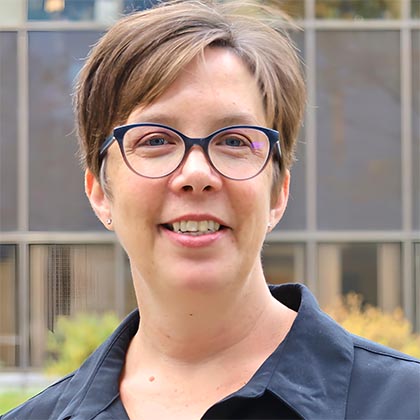
Tanya Sanders
Education
- PhD, UVic School of Nursing,
- Master of Science in Nursing, UBC,
- Bachelor of Science in Nursing, UCC,
More
Interests
Nursing and health care:
- Community Health and Nursing
- Indigenous Health and Nursing
- Community Health Nursing Education
- Nursing Leadership and Governance
Research interests
- Community Health Nursing
- Indigenous Health Nursing
- School Health
- Home Care
- Institutional Ethnography
Employment history
Thompson Rivers University
School of Nursing
September 2013 to Present
Health Canada, First Nations and Inuit Health Branch, BC Region,
Transfer Nursing Team
* Transfer Nursing Management and Practice Consultant
Thompson Rivers University
*School of Nursing Sessional Instructor
Interior Health Authority
* Public Health Nurse
* Family Health Program Leader-Prevention Services
Xaxli'p First Nation
* Community Health Nurse
Northern Health Authority
* Program Manager Public Health Nursing
* Injury Prevention Coordinator
* Public Health Nurse
Publications
- Schofield, R., Chircop, A., Currie, G., Foster, S., Hamilton, J., Kall, D., LuctkarFlude, M., Riselli, D. M., Oke, S., Ryan, M. M., Sanders, T., Tam, S., & Tyerman, J. (2023). Developing simulation games to advance public health nursing competence in baccalaureate education. Public Health Nursing, 40, 288-297. https://doi.org/10.1111/phn.13163
- Contandriopoulos, D., Stajduhar, K., Sanders, T., Carrier, A., Bitschy, A., & Funk, L. (). A realist review of the home care literature and its blind spots. Journal of Evaluation in Clinical Practice, https://doi-org.ezproxy.tru.ca/10.1111/jep.13627, 1-10.
- Stajduhar, K., & Sanders, T. (, July 1). COVID-19 shows support for home care long overdue. Vancouver Sun. Also published: July 6, 2020 Quoi Media; July 8, 2020 The Hill Times, July 8, 2020 Ottawa Life Magazine, July 8, 2020 The Good Man Project, July 27, 2020 Policy Options Politiques, August 20, 2020 The Canadian Business Journal.
- Sanders, T., O'Mahony, J., Duncan, S., Mahara, S., Pitman, V., Ringstad, K., & Weatherman K. (). Opening the doors for school health An exploration of Public Health Nurses' capacities to engage in comprehensive school health programs. Public Health Nursing, 36 (3), 348-356.
- Duncan, S., & Sanders, T. (). Community health nursing. In M. Buck, L. Ferguson, L. Yiu & L. L. Stamler (Eds.), Fundamentals of Canadian Nursing: Concepts, Process, and Practice (4th ed., pp 246-261). Toronto, ON: Pearson.
- Sanders, T. (, October). Enhancing community health nursing education through the use of the Canadian Community Health Nursing Standards of Practice. UBC MScN Major Paper.
Presentations (a selection of professional presentations):
- Sanders, T., & Duncan, S. (, June). The social relations of home care nursing work. International Collaboration for Community Health Nursing Research Conference. Virtual Conference hosted by Linnaeuous University, Sweden.
- Sanders, T. (, June). Mapping The Social Relations of Home Care Nursing Work Research in Progress. Canadian Doctoral Nursing Network Conference. Virtual Conference hosted by University of Regina, SK.
- Sanders, T. (). Valuing Prevention. Valuing what didn't happen: How does the valuing of absence influence our understanding of the role of nurses in prevention? International Philosophy of Nursing Conference, Victoria BC.
- O'Mahony, J., Duncan, S., Mahara, S., Pitman, V., Ringstad, K., Sanders, T., Stade, S.,& Weatherman, K.,
Courses taught
- BScN Program Year Lead
- Student Advisor & Practice Placement Coordinator Semester BScN Program
- Coordinator, Aboriginal Pathways to Health Careers Program
- NURS Health & Healing VII, Promoting Community and Society Health
- NURS Nursing Practice VI, Promoting Health of Communities and Society
- NURS Nursing Practice VIII, Transitioning to BScN Graduate
- NURS Professional Practice V, Leadership in Nursing
- NURS Nursing Practice VII, Community Health Nursing Practice
- NURS Health and Healing I, Living Health
- NURS Nursing Practice V, School Health
- NURS Professional Practice I, Foundations to the Discipline of Nursing
- NURS Nursing Practice IV, Introduction to Community Health
- CPE III Consolidated Practice
- NURS Nursing Practice VI, Nurses Influencing Change
- NURS Nursing Practice IV, Child Health
- NURS /284 Lab

Greg Anderson
Dr. Greg Anderson is a Professor and Interim Dean, School of Nursing at Thompson Rivers University. Greg is an applied researcher seeking solutions to real world problems encompassing stress (exercise, environment and occupation) and performance.
More
Recent work has been studying the impacts of stress on high stress and low control work environments (public safety and frontline health care professions), and impacts on physical and mental health. Greg is well published in the area and has been an active contributor to the establishment of the Canadian Institute for Public Safety Research and Treatment. His recent Canadian Institutes for Health Research grant developed and tested an ecological model of resilience that included personal, family, and organizational factors.

Jananee Rasiah
Dr. Jananee Rasiah is an Associate Professor in the School of Nursing at Thompson Rivers University. Dr. Rasiah is a nurse, educator, researcher, and academic leader with experience spanning nursing education, health services research, healthcare leadership, and academic administration.
More
Her research program, Enhancing Later-life Aging, Care, and Experiences (EnLACE) focuses on aging, frailty, social vulnerability, healthcare utilization and transitions, and improving healthcare experiences for older adults. Her work involves patient and public engagement, knowledge translation, and arts-based approaches to knowledge mobilization.
Her research uses population-based and linked administrative health data, evidence synthesis, mixed methods, and participatory approaches to understand complex health and health-system challenges. She works collaboratively with researchers, clinicians, health system leaders, patients, caregivers, and community partners across Canada and internationally. Her current program of research includes national work examining frailty, social vulnerability, social frailty, loneliness, and adverse health outcomes among older Canadians.
Dr. Rasiah is always interested in working with undergraduate and graduate trainees who are eager to build their research skills, contribute to meaningful projects, and gain experience in a collaborative, research-intensive environment.
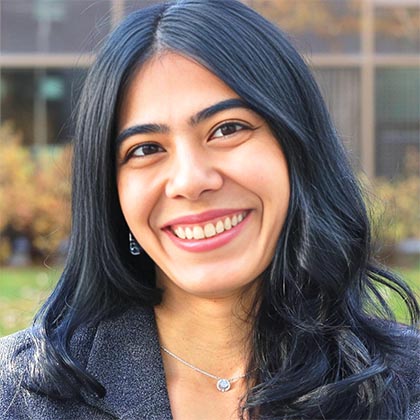
Anila Virani
Research Interests
My program of research aims to explore the relationships between people and technology within healthcare and educational contexts.
- Health informatics, clinical informatics, digital health ehealth, and mhealth.
- Technological innovation in nursing education digital pedagogies and e-learning.
- Population health Chronic disease management (stroke, dementia, diabetes and amputation) and its impact on individuals and families including marital relationships and caregiving.
More
Education
-
2021-2022: Postdoctoral Research Fellow, Mitacs Accelerate Intern,
University of British Columbia, Canada
Project: TrustSphere: An Integrated Secure Digital Health Platform -
2013-2020: Ph.D. in Nursing, University of Calgary , Canada
Dissertation title: CoDevelopment of an e-Resource to Support Parents' Search for Mobile Apps. -
2010-2013: Master of Nursing, University of Calgary, Canada
Thesis title: Amputation Associated Stressors and Couple's Adjustment - 2002-2004: Post RN BScN, Aga Khan University, Pakistan
- 1996-1999: Diploma in Nursing, Aga Khan University, Pakistan
Publications
- Virani, A., Duffett-Leger, L. & Letourneau, N. (2021). Parents' use of mobile applications in the first year of parenthood: A narrative review of the literature. Health Technology.
- Virani, A., Duffett-Leger, L. & Letourneau, N. (2021). Co-designing an e-resource to support parents??? search for mobile apps. Health Technology, 5(10).
- Virani, A., Duffett-Leger, L. & Letourneau, N. (2020). Parents' perspective of parenting app use. Journal of Informatics Nursing, 5(1). 8-18. Featured as Continuing Nursing Education article
- Virani, A., Duffett-Leger, L., & Letourneau, N. (2019). Parenting apps review: In search of good quality apps. mHealth 5(44) 1-15.
- Virani, A., Werunga, J., Ewashan, C. & Green, T. (2015). Caring for patients with limb amputation. Nursing Standard, 30(6), 51-60. ???Invited publication and was selected as a Continuing Professional Development article.
- Bright, K., Brockway, M., Carrera, G., Kathol, B., Keys, E., Moules, J.,???Virani, A. (2015). Out of order: To Debbie and Dave, Chris and Bill, MJ and John. Journal of Applied Hermeneutics.
- Virani, A. (2015). Stroke Risk calculator app. Emergency nurse, 23(1), 14.
- Virani, A. (2014). Stroke patient app. Nursing Standard, 29(3), 33.
- Virani, A., Green, T., & Turin, T. (2014). Phantom limb pain: A nursing perspective. Nursing Standard, 29(1), 45-50.
- Virani, A. & Green, T. (2012). Amputation-associated stressors and dyadic adjustment. (Master???s thesis). University of Calgary
- Virani, A. (2004, April 22-28). Beyond the taboos. The Review, Dawn.
Conference presentations/posters
- Virani, et al. (2022). Healthcare providers' perspectives on TrustSphere: An Integrated Secure Digital Health Platform. 15th International Conference on Advanced Technologies & Treatments for Diabetes. Paris, France
- Pinkney, Virani, et al. (2022). Evaluating the Feasibility and Benefit of TrustSphere: A Novel Digital Health Solution for Children Living with Type 1 Diabetes. 15th International Conference on Advanced Technologies & Treatments for Diabetes.France
- Virani, et al. (2021). Co-designing an e-Resource to Support Parent???s Mobile Applications Search. Seventieth International Conference on Technology, Knowledge, and Society, University of Melbourne, Australia
- Virani, et al. Review and Evaluation of Mobile Applications (Apps) for Parents. (2019) American Academy of Pediatrics (AAP) National Conference & Exhibition: 2019 Council on Clinical Information Technology (COCIT). Louisiana, United States
- Virani, et al. Parents??? Mobile Applications Searching Behaviors: A Focus Group Study. (2019) Canadian Nursing Informatics Association Conference 2019, University of New Brunswick
- Virani, et al. Developing an Online Resource to Support Parents??? Information-Seeking with Mobile Applications (apps). (2018) Peer Beyond Graduate Research Symposium, University of Calgary
- Virani, et al. Developing an Online Resource to Support Parents??? Information-Seeking with Mobile Applications (apps). (2018) Peer Beyond Graduate Research Symposium, University of Calgary
- Virani, et al. Mobile Applications for Stroke: Review of Apps Targeting Health Care Professionals and General Population. (2015) European Stroke Conference 2015, Vienna, Austria
- Virani, et al. Use of Mobile Application in Stroke Prevention. (2014) Fourth International Conference on Health, Wellness and Society, University of British Columbia
- Virani, et al. Amputation-Associated Stressors and Dyadic Adjustment. (2012) 26th Margaret Scott Wright Research Day: Making a Difference: Nursing Research in Action. University of Calgary
Employment history
- 2008-2022: Alberta health services, Calgary, Canada (RN: Medicine, Cardiac Surgery, and Neurosciences)
- 2021-2022: University of British Columbia (Research Fellow)
- 2012-2015 & 2020-2022: University of Calgary, Canada (Instructor, Research assistant)
- 2016: Columbia College, Calgary, Canada (Nursing instructor)
- 2011-2013: Mount Royal University, Calgary, Canada (Clinical Instructor)
- 2006-2008: Neuropil Hospital, Dubai, UAE (RN: ICU)
- 2004 -2006: Aga Khan University Hospital, Pakistan (Nursing instructor)
- 1999 -2002: Aga Khan University Hospital, Pakistan (RN: Post-Anesthesia Care Unit)
Courses taught
- NURS 6500: Advanced Practice Internship (Fall 2023)
- NURS 3380: Consolidated Practice Experience 3 (Spring 2023)
- NURS 2830: Health & Promotion 4: Health Transition (Winter 2023)
- HLSC 4650: Health Science 4: Pathophysiology 3 (Fall 2022 and 2023)
- NURS 4740: Health Promotion 8: Health Transitions (Fall 2022 and 2023)
- NURS 1214: Professional Practice I
- NURS 2114: Professional Practice II
- NURS 3104: Professional Practice III
- NURS 4112: Integrated Professional Practice
- NURS 499 Integrating Nursing Roles and Practices IV
- NURS 497: The Science of Health IV: People Experiencing Chronic Health Challenges
- NURS 495: The Discipline and Profession of Nursing IV: Understanding the Challenges of Leadership and Systems of Care
- Responsible Conduct of Research
- Introduction to Health Research Methods
- CPNP 117: Pharmacology
- Community Health Nursing - II
- Adult Health Nursing - II
- Pharmacology - II
- Introduction to Computers Course
- Teaching -Learning Course
Professional affiliations
- College and Association of Registered Nurses of Alberta
- British Columbia College of Nurses and Midwives